MARAGTAS



Written by Devin Galloway
Illustrated by Ethel Martinez
The story of the ten datus is widely known across the islands of the western Visayas, especially Panay, Guimaras, and Negros. Outside these few islands though you’d be hard pressed to find anybody that knows the story, which is astonishing considering how important it is to Filipino history. The datus’ arrival on Panay and their subsequent settlement of the surrounding islands can be regarded in many ways as the beginning of the Philippine nation.
The story of the ten datus begins in the mighty Sri Vijayan empire ruled by Raja Makatunao. Sri Vijaya was a regional powerhouse in it’s day and as raja, Makatunao was one of the most powerful people in the known world. Like many tyrants, he was a jealous man who often seized property from his own citizens or kidnapped their wives to satisfy his greed and lust.
A coalition of nine datus formed (datu is a title of nobility; collectively they were the peers of the realm) with the goal of resisting Makatunao’s growing appetites. When the raja tried to kidnap one of their wives, civil war broke out. The datus were defeated and exiled from the empire. Rather than accept their sentence however, the datus went into hiding and began plotting a coup.
Datu Puti, the raja’s chief advisor caught wind of their scheme and persuaded them that they didn’t have a chance of successfully pulling it off. Instead he convinced them that they’d be happier accepting their exile and finding a new home where Makatunao couldn’t reach them. Datu Puti didn’t like the way the raja had been treating his citizens, so he voluntarily gave up his position to go into exile with the other nine.
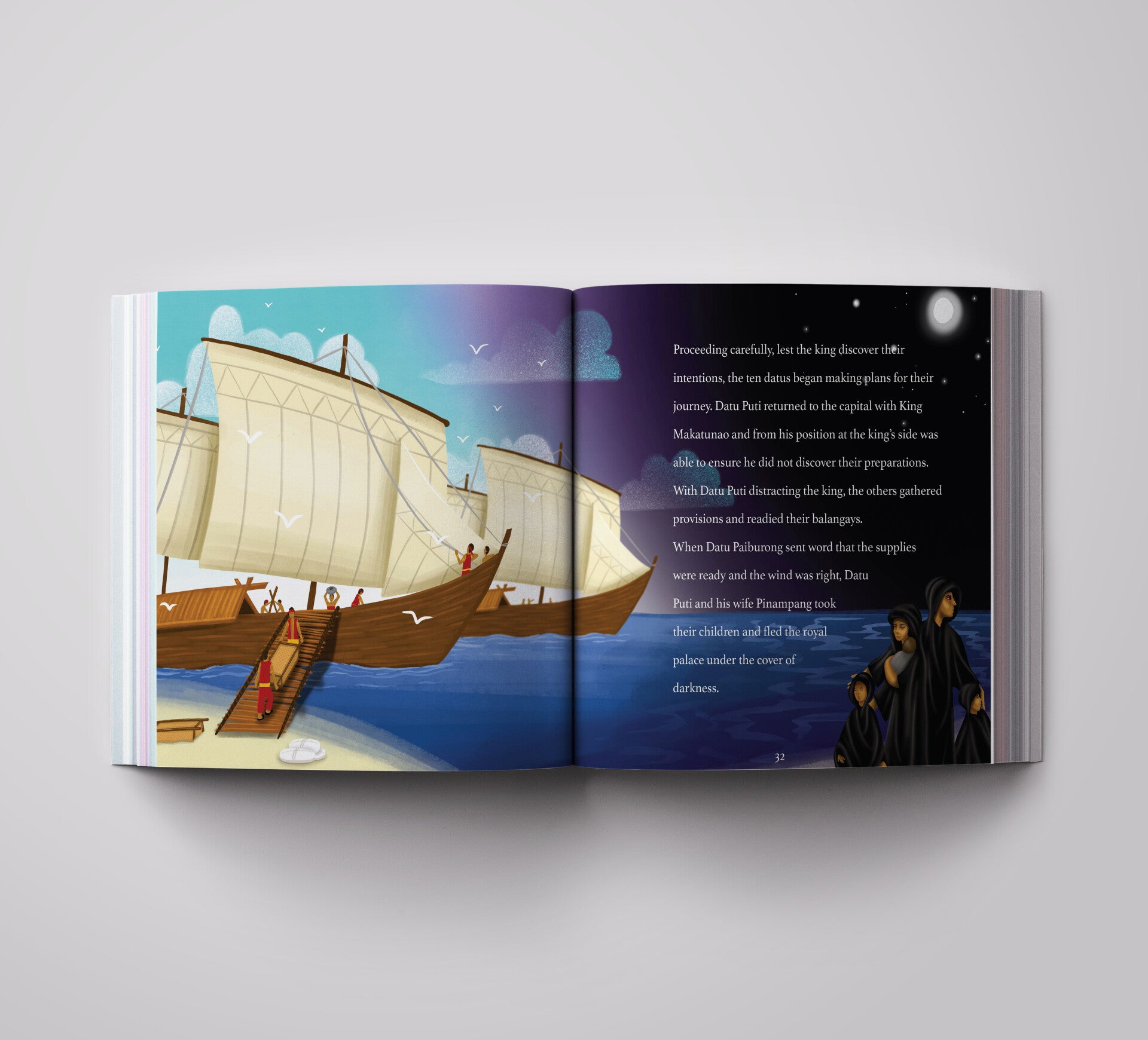
The ten datus and their households sailed northeast, not only past the edges of Makatunao’s empire, but so far that nobody knew what they would find. They eventually arrived at Panay, in what is now the Philippines. Panay and the surrounding islands were inhabited by the Ati, a negrito group that had settled the islands thousands of years earlier.
Weary of the bloodshed they’d left behind, the datus searched for a way to live peacefully with the Ati. After extensive negotiations, both parties reached an agreement. The Ati would move inland and the datus would live along the coats. In exchange for the coastal lands the datus offered much of their remaining wealth, including, most famously, the golden sadok (hat) that was an emblem of Datu Puti’s imperial status in Makatunao’s court. A three-day feast was held to celebrate the deal.
Once settlements had been established on Panay, Datu Puti and two other datus set out to explore the other islands in the Philippine archipelago. After an adventurous journey they found themselves on Luzon and decided to stay, becoming the fathers of the Tagalog people.